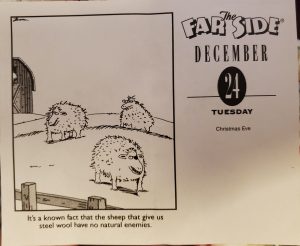
Credit to Gary Larson

Credit to Gary Larson


The Nov/Dec meeting of the NVWG will be on 3 December, starting at 1pm at the Congregational Church of Harvard, 5 Still River Rd, Harvard MA. (There is no meeting in November.) Note that this is an afternoon hands-on meeting!
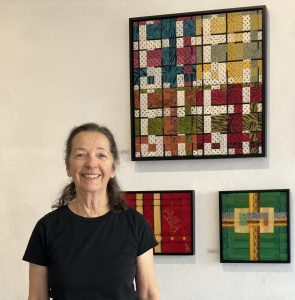
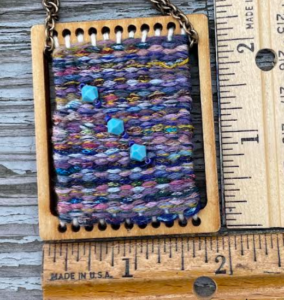
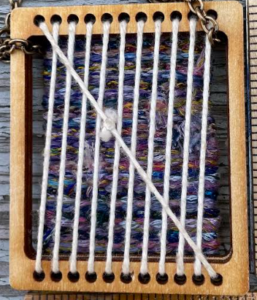
Guild member Arlette Stawasz will be leading us in creating woven pendants to be used as an ornament or for a necklace. In keeping with our “Zero Waste” theme, we’ll be using thrums, so grab some pretty ones from your scrap bag! (There will plenty to share, so come even if you don’t have any thrums.)
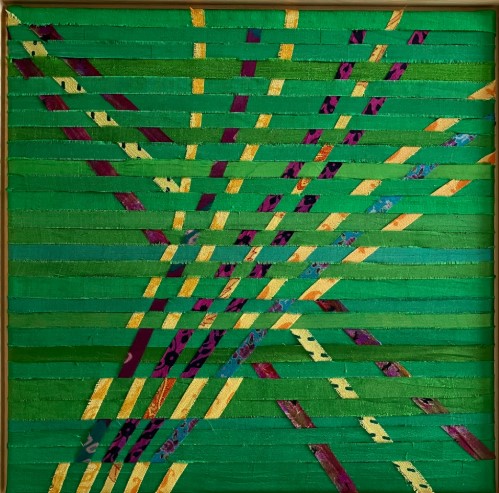
Arlette will supply the tiny Lucite frames on which we’ll weave. The photo has a wooden frame, but we’ll be using clear Lucite.
Materials to bring:
Arlette has been weaving about 20 years and is the Resource Manager in the Textiles Area at the MakeIt Labs in Nashua. She likes exploring different kinds of weaving.

Subscribe to get access to the rest of this post and other subscriber-only content.
An article from Harvard Magazine on woven sports cards
https://www.harvardmagazine.com/2024/11/stevengraphs-silk-portraits
Subscribe to get access to the rest of this post and other subscriber-only content.

Tuesday 22 Oct 2024, starting at 7 pm
Congregational church of Harvard, 5 Still River Rd, Harvard MA
Open to the public!
Samantha Marino of Bay State Textiles will talk about what can be done locally to play a role in managing the 25 billion tons of textiles that are discarded each year in the United States.
Bay State Textiles is a Massachusetts-based company working to keep textiles out of the waste stream, educate communities, and raise money for schools and towns across the Commonwealth with their rebate program. This highly successful program currently partners with more than 100 school districts, 150 municipalities, over 600 schools and several colleges and Universities. Bay State Textiles gives back thousands of dollars to communities and schools every year. Samantha Marino has been the recycling coordinator/account manager at Bay State Textiles for over three years. Her main goals in her position at BST are to expand the program into new areas, educate residents and students about textile recycling, and provide exceptional service to partners and the general public.
Refreshments will be served following the program.
Download a flier here. For more information, contact the NVWG Program Committee.
Tips and tricks for zero waste and thriftiness in weaving!
Tuesday 24 September, 7pm (social time), 7:30pm (meeting start time)
Congregational Church of Harvard

To kick off our “Zero Waste” theme this year, members will share ideas about what to do with thrums, scraps of leftover cloth, and DIY tools for easier warping and weaving. Bring your own ideas and any show and tell to this social meeting.
2024-25 Guild Challenge: Reuse something in a woven piece and/or find a way to interpret “zero waste”. Find a way to use something that would otherwise be thrown away. Yarn from Reba is available to facilitate this challenge. Start thinking now so it will be ready for our potluck in June!
Some announcements
Our End-of-Year Potluck will be on Tuesday 6/25/24 starting at 6pm. If you need location information, please contact the program chairs.

Parking: on the driveway or diagonally on the grass
What to bring:
Business meeting: There will be a brief business meeting to elect officers. There will also be door prizes!
* Extra! Extra! Blanket Sale
In preparations for our year of “zero waste”, all members are invited to bring along items to sell, swap or give away. Anything weaving-related is fair game: yarn, equipment, books etc. Individuals must bring their own table or blanket to display their items and must handle their own finances. And all unsold/unswapped items must go home with you – nothing left behind as a “gift” for the hostess. 😉
7:00 pm at the Congregational Church in Harvard, MA

Lace makers Linda Kukolich and Sue Felshin will be presenting a program on bobbin lace. They will talk about lace making and about the use of lace in the 18th century, when lace reached its peak as a craft and an element of fashion, before mechanization destroyed both the economics of lace making and the social exclusivity of lace for fashion. They will bring examples of lace and works in progress for a demonstration of the techniques. A project will be set up for people to try crossing and twisting some bobbin pairs.
Linda Kukolich first saw bobbin lace in 1983 and loved it so much she had to start right away, learning from a photo copy of a book and making her own (terrible) materials. The materials were So bad, she soon gave it up. After a gap of about a decade, she met Lies Stolk at a lace demo. That lead to weekly classes, access to high quality tools and a variety of patterns and lace styles. She has been making lace ever since.
Sue Felshin started crocheting lace in the 1980s. When she became interested in 18th century reenacting in the 1990s, she switched to bobbin lace, studying under Lies Stolk of Hudson, MA. She has researched 18th century use and styles of lace, has presented programs to reenactors and demonstrated to the public, and when she retires she may finally have time to finish her perennially not-quite-ready webpage on the subject.

Tuesday 23 April 2024, 7:00 p.m. at the Congregational Church in Harvard, MA
Presented by NVWG member Arlette Stawasz
Caning is saving chairs with reeds woven in patterns. This technique really shows strength in numbers. Find out the difference between cane webbing and strand cane and a brief synopsis of both. This demo will concentrate on strand canes. There will be some chairs to practice the different levels of strand caning.

Arlette Stawasz has been a weaver for many years. Still a beginner, she wanted to explore weaving with different materials. The pandemic offered her that opportunity. Having accumulated the materials, included seat-less chairs, she decided to try her hand at it on a hot muggy day. Little did she know that the conditions were ideal for chair caning. Come find out why.